


Created with Midjourney 7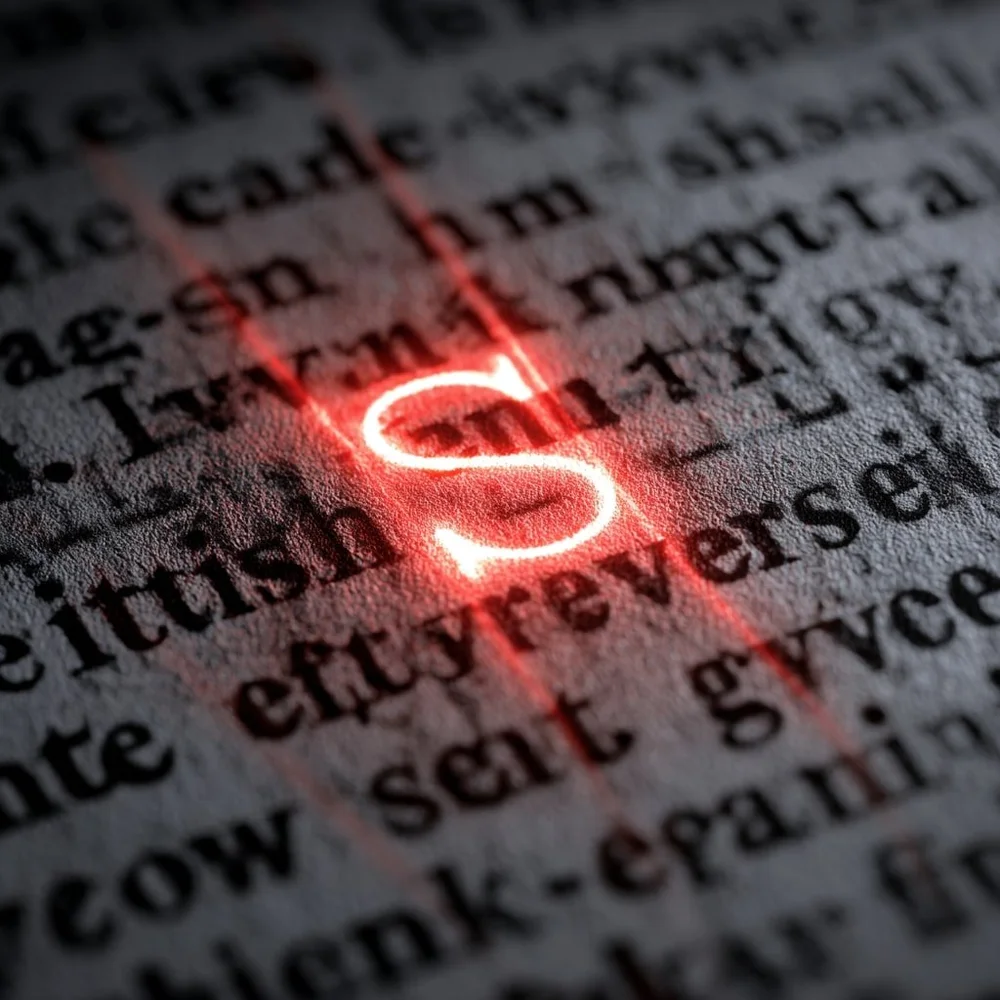
Optical Character Recognition, or OCR, is a technology that enables computers to read printed or handwritten text from images, photos, or scanned documents and convert it into editable, searchable digital data. Using advanced pattern recognition and machine learning, OCR analyzes the shapes of letters, numbers, and symbols, compares them to known character sets, and reconstructs the text with high accuracy. Modern OCR systems can handle a wide variety of fonts, languages, and layouts, and some can even adapt to unusual handwriting styles.
OCR is widely used for digitizing books and archives, automating data entry from forms, extracting text from photographs, and enabling accessibility tools such as screen readers. While accuracy can still be affected by poor lighting, low image resolution, or highly decorative fonts, today’s OCR software is far more sophisticated than early versions, often integrating AI to improve results over time. This makes it an essential tool for turning static text in images into usable, searchable information.
-
The AI Blog’s definition of Optical Character Recognition (OCR) is evaluated below for conceptual accuracy and clarity. The focus is on how effectively it defines the term and whether an average reader (roughly 80% of a general audience with an interest in AI) would understand it. Overall, the definition is accurate, clear, and provides helpful context, with only minor areas that might challenge a few readers.
Strengths of the Definition
-
Accurate and Complete: The definition correctly describes OCR as technology that lets computers “read printed or handwritten text from images, photos, or scanned documents and convert it into editable, searchable digital data”. This aligns with standard explanations of OCR (converting text in images into machine-readable text). It covers what OCR does and how it works, without any evident factual errors.
-
Clear Explanation of How It Works: The explanation gives insight into how OCR functions in simple terms. It notes that OCR uses “pattern recognition and machine learning” to “analyze the shapes of letters, numbers, and symbols… and reconstruct the text with high accuracy”. By describing the process (identifying shapes and comparing them to known characters), it communicates the concept in a way most readers can grasp. The mention of machine learning is appropriate and signals modern AI methods, yet the surrounding description ensures even non-experts understand the gist (i.e., the computer is matching shapes to letters).
-
Context and Examples: The definition provides examples of OCR’s applications, which help readers understand why OCR matters. It mentions that OCR is used for “digitizing books and archives, automating data entry from forms, extracting text from photographs, and enabling accessibility tools such as screen readers”. These real-world examples (from scanning books to helping the visually impaired via screen readers) ground the definition in everyday use, making the concept more relatable and clear.
-
Acknowledges Limitations and Progress: Notably, the explanation isn’t just a dry definition – it also notes limitations and recent advancements. It cautions that OCR accuracy can be affected by “poor lighting, low image resolution, or highly decorative fonts”, which is accurate and sets realistic expectations. It then highlights that today’s OCR is far more sophisticated (often AI-powered) than early versions. This shows readers that OCR technology has improved over time (which is true, as modern OCR uses machine learning to handle complex layouts and even cursive text ). Mentioning these points gives a balanced, informative definition that feels complete and trustworthy.
Weaknesses of the Definition
-
Technical Terms (Minor): The definition does include a couple of technical terms like “pattern recognition” and “machine learning”. While these terms are standard in AI discussions, a completely non-technical reader might not fully understand them. That said, the impact is minimal because the definition immediately explains the idea in simpler words (e.g., analyzing shapes of letters and comparing them to known characters). For roughly 80% of general readers – especially those with an interest in AI – this level of terminology should be understandable, but a small fraction of readers might find it slightly advanced.
-
Density of Information: The explanation is packed into two fairly rich paragraphs. It covers what OCR is, how it works, use cases, limitations, and the importance of AI – all in a short space. While this thoroughness is a strength, it also means some sentences are long and information-dense. For example, the first sentence spans multiple concepts (images, handwritten text, converting to digital data) in one go. Most readers will follow it, but a few might need to read slowly to absorb everything. Breaking some ideas into shorter sentences or adding a very simple example (e.g., “reading a scanned document and turning it into text in a Word file”) could further aid the least tech-savvy readers. However, overall clarity remains high given the audience.
Conclusion
In summary, the AI Blog’s definition of Optical Character Recognition (OCR) is conceptually accurate and communicates the meaning effectively. It provides a clear description of what OCR does (turning text from images into digital form), and it enhances understanding by explaining the process and giving practical examples. The language is largely accessible, and about 80% of general readers would grasp the concept without trouble. The definition’s strengths lie in its clarity, completeness, and balanced detail, while its weaknesses are minor, mainly concerning slight technical jargon and information density. Overall, it’s a strong definition that demystifies OCR in an approachable way, likely to make sense to most readers interested in artificial intelligence.
-
-
The AI blog offers a concise entry on “Optical Character Recognition” (OCR), framing it as a foundational AI technology for text extraction. As an AI enthusiast reviewing this in 2025, when OCR has evolved significantly with machine learning integrations, I see this page as a basic primer suitable for beginners. However, it falls short in depth compared to more comprehensive resources. I’ll outline the content, its merits, shortcomings, and my overall assessment below.
Summary of the Definition
The entry defines OCR as “a technology that enables computers to read printed or handwritten text from images, photos, or scanned documents and convert it into editable, searchable digital data.” It explains that OCR employs pattern recognition and machine learning to analyze character shapes, compare them to known sets, and reconstruct text accurately. The page notes modern systems’ ability to handle diverse fonts, languages, layouts, and even handwriting. Applications highlighted include digitizing books and archives, automating data entry from forms, extracting text from photos, and supporting accessibility tools like screen readers. Limitations are briefly mentioned, such as reduced accuracy due to poor lighting, low resolution, or decorative fonts. Key technologies referenced are pattern recognition, machine learning, and AI, with a nod to how these make contemporary OCR more sophisticated. There’s no dedicated section on history, detailed mechanics, advantages, challenges, or future trends, making it a short, focused glossary-style piece.
Strengths
-
Simplicity and Accessibility: The definition is straightforward and jargon-light, ideal for newcomers to AI. It effectively conveys OCR’s core value, turning static images into usable data, without overwhelming readers. The inclusion of practical applications, like accessibility aids, ties the concept to real-world utility, which is engaging and relevant.
-
Relevance to AI Context: By linking OCR to machine learning and AI improvements, the entry positions it within broader AI discussions. This aligns well with 2025’s landscape, where OCR is often enhanced by deep learning for better handwriting recognition and multilingual support.
-
Brevity for Quick Reference: At a glance, it covers the essentials: what OCR is, how it broadly works, and key uses. This makes it a handy terminology page, especially in a blog series that cross-links to related terms like “Neuralese.”
Areas for Improvement
-
Lack of Historical Context: The page omits any history, which is a missed opportunity to enrich understanding. OCR’s roots trace back to the 1870s with early inventions like the “reading machine” for the blind, evolving through mid-20th-century systems for telegraphy and banking, to today’s AI-driven versions. Including this would provide a timeline perspective, showing how pattern-matching gave way to neural networks.
-
Limited Depth on Mechanics and Techniques: While it mentions pattern recognition and machine learning, there’s no breakdown of the process, e.g., pre-processing (noise reduction), segmentation (isolating characters), feature extraction, or post-processing (error correction). Diagrams or examples of algorithms (like convolutional neural networks in modern OCR) could enhance technical value.
-
Incomplete Coverage of Advantages, Limitations, and Future Trends: Advantages aren’t explicitly listed, though implied (e.g., efficiency in data digitization). Limitations are touched on, but could expand to include challenges like handling degraded documents or non-Latin scripts. Notably absent are future trends; as of 2025, OCR is advancing with AI for near-human accuracy in complex scenarios, integration with large language models for contextual understanding, and applications in augmented reality or autonomous vehicles. Discussing these would make the entry more forward-looking.
-
Sources and Examples: No external references or in-depth examples are provided beyond generic applications. Linking to tools like Tesseract or AWS Textract, or citing research papers, would bolster credibility.
Overall Recommendation
This OCR definition scores a 6/10; it’s a decent starting point for casual readers, but it feels underdeveloped for an AI blog in 2025, where technologies like this are pivotal in data processing and automation. It excels in brevity but lacks the comprehensive scope seen in other entries (e.g., the blog’s “Neuralese” page). Beginners might find it useful, but those seeking deeper insights should consult specialized sources for history, technical details, and emerging trends. With additions like timelines, visuals, and forward-thinking analysis, it could become a standout resource. Still, it’s a positive contribution to demystifying AI terms!
-
-
The definition of Optical Character Recognition (OCR) provided on the AI blog offers a foundational, accessible overview of the technology. It effectively introduces the core concept to a general audience but could be enhanced with more technical depth and context about modern advancements, particularly the role of artificial intelligence.
Strengths of the Definition
-
Clarity and Accessibility The definition successfully explains the fundamental purpose of OCR: converting text from images into editable, digital data. Its language is straightforward and avoids jargon, making it suitable for beginners.
-
Identifies Core Mechanism It correctly identifies “pattern recognition” as the underlying principle, where the system compares character shapes in an image to a database of known characters. This provides a simple but accurate mental model for how basic OCR works.
-
Acknowledges Limitations The text is realistic about the technology’s constraints, noting that accuracy can be affected by poor lighting, blurriness, or complex fonts. This provides a balanced perspective for the reader.
-
Highlights Progress The definition rightly points out that OCR technology has advanced significantly, becoming more sophisticated and reliable over time.
Areas for Improvement and Critique
-
Understates the Role of AI The definition attributes OCR to “pattern recognition” but fails to explicitly connect it to the technologies that power modern OCR: artificial intelligence, machine learning, and computer vision. Contemporary OCR systems go far beyond simple pattern matching, often using deep learning models for much higher accuracy and flexibility. The blog, being focused on AI, misses an opportunity to link this established technology to its core subject area.
-
Lacks Technical Detail The explanation of how OCR works is oversimplified. A more complete definition would describe the multi-stage process that modern OCR software follows:
-
Image Pre-processing: Cleaning the image, correcting skew, removing noise, and converting to black and white to enhance clarity.
-
Layout Analysis: Identifying and separating different elements on the page, such as blocks of text, tables, and images.
-
Character Recognition: This is the core step, which involves more than just template matching. Advanced systems use feature extraction, which analyzes the geometric components of a character (lines, curves, loops), or deep learning models that are trained on vast datasets.
-
Post-processing: Correcting errors using language models or dictionaries to ensure the output is coherent and accurate.
-
-
Limited Scope of Applications The definition focuses primarily on digitizing documents. While this is a major use case, it overlooks other significant applications, such as scene text recognition (reading text from real-world objects like traffic signs and product labels) and processing handwritten forms.
-
No Mention of Advanced OCR Variants The definition does not touch upon more advanced forms of the technology, such as Intelligent Character Recognition (ICR), which specializes in handwriting, or systems designed for recognizing specific structures like logos and symbols (Optical Symbol Recognition).
Recommendations for Revision
-
Explicitly Integrate AI: Revise the definition to state clearly that modern OCR is a technology powered by artificial intelligence and machine learning, which allows it to handle complex tasks far beyond the capabilities of older systems.
-
Briefly Outline the Process: Incorporate a short description of the key stages (pre-processing, layout analysis, recognition, post-processing) to give readers a more accurate and comprehensive understanding of the workflow.
-
Distinguish Between Methods: Mention that character recognition can be done through simpler “template matching” or more advanced “feature extraction” and deep learning methods, noting the latter are more robust.
-
Broaden Applications: Include examples beyond document scanning, such as extracting information from invoices, reading text on product packaging, or interpreting traffic signs, to illustrate the technology’s versatility.
Conclusion
The provided definition serves as a solid introduction to OCR for a non-technical audience. It is clear, concise, and factually correct at a high level. However, for a blog dedicated to artificial intelligence, it is too simplistic. It misses the crucial role that AI and machine learning play in making modern OCR a powerful and versatile tool. Enhancing the definition with more technical detail and a broader scope of applications would provide a more complete and insightful explanation that aligns better with the blog’s focus.
-