



TL;DR A Generative Adversarial Network (GAN) is an AI technique where two neural networks compete against each other to generate realistic new data.
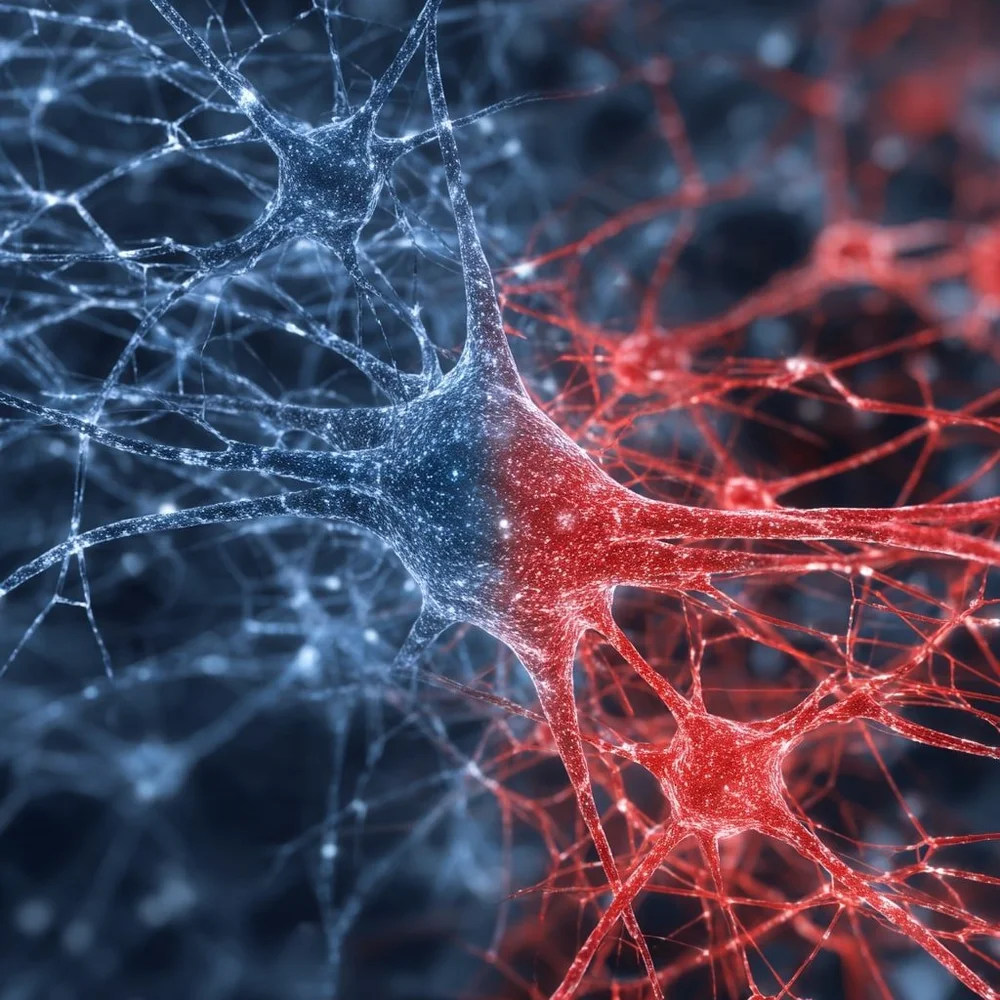
A Generative Adversarial Network (GAN) is a powerful machine learning framework for generating new data that closely resembles real examples. Introduced as a breakthrough in generative modeling, GANs work by pitting two neural networks against each other, enabling them to learn from feedback and iteratively improve. This adversarial setup has made GANs especially effective at producing realistic images, audio, and other complex data types, and they have played a significant role in advancing modern generative AI.
For non-technical audiences, a GAN can be thought of as a creative competition between two AIs. One AI, called the generator, tries to create fake data such as images that look real. The other AI, called the discriminator, acts like a judge, trying to tell whether something is real or fake. Over time, the generator gets better at fooling the judge, and the judge gets better at spotting fakes. This back-and-forth process continues until the generated results become very realistic, sometimes nearly indistinguishable from real data.
Technically, a GAN consists of two neural networks trained simultaneously through a minimax optimization process. The generator learns to map random noise to samples that approximate the actual data distribution, while the discriminator learns a binary classification task to distinguish real samples from generated ones. Training proceeds as a two-player zero-sum game, where the generator minimizes the discriminator’s ability to correctly classify samples, and the discriminator maximizes it. Variants such as DCGANs, Wasserstein GANs, and conditional GANs address stability issues and improve convergence, sample quality, and controllability.
-
Two competing models: a generator and a discriminator
-
An adversarial training process that improves both networks
-
Ability to generate realistic synthetic data
-
Applications in images, video, audio, and data augmentation
-
Training challenges such as instability and mode collapse
Generative Adversarial Network (GAN)
What You’re Seeing
A GAN is a two-player game:
the Generator makes fake samples, and the Discriminator
tries to tell real from fake. They train by competing.
Generator
G
Turns random noise into “fake data” and tries to fool D.
Discriminator
D
Labels points as real vs fake and gets better at spotting fakes.
Single cluster (easy)
Two clusters (harder)
Real points are the target distribution the generator is trying to match.
1 mode
2 modes
If the real data has multiple clusters, a low-capacity generator may collapse to one.
4 steps/s
This changes how many training updates happen per second.
0.03
Higher can learn faster but may wobble; lower is steadier.
Show discriminator field
Blue means “D thinks real”, red means “D thinks fake”. The white line is D = 50%.
Real
Fake (G)
Boundary (D = 50%)
Goal: D accuracy → ~50%.
Epoch: 177 – D loss: 0.67 – G loss: 0.75 – D acc: 60% – State: Running
ELI5 A GAN is like one kid drawing fake pictures and another kid checking if they look real. The more they play this game, the better the drawings get, until they look almost the same as real ones.